
Patrol023
How a family company moved from an owner-led model to a professionalised organisation that grows without operational reliance on the owners.
A service company at the limits of the founder model
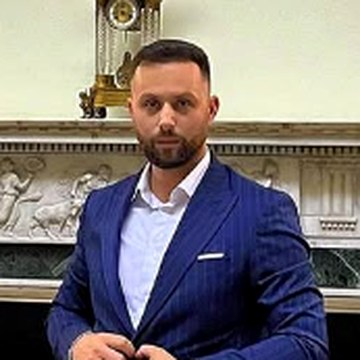
Patrol023 is a family company in physical and technical security. In the second generation, the company is led by Milan Ristić, who was the key driver of its professionalisation.
Security is a labour-intensive service business in which value is created in the field — through people deployed across a large number of locations and shifts. In such a model, quality doesn't depend on a single product but on the organisation's ability to coordinate a large number of people every day.
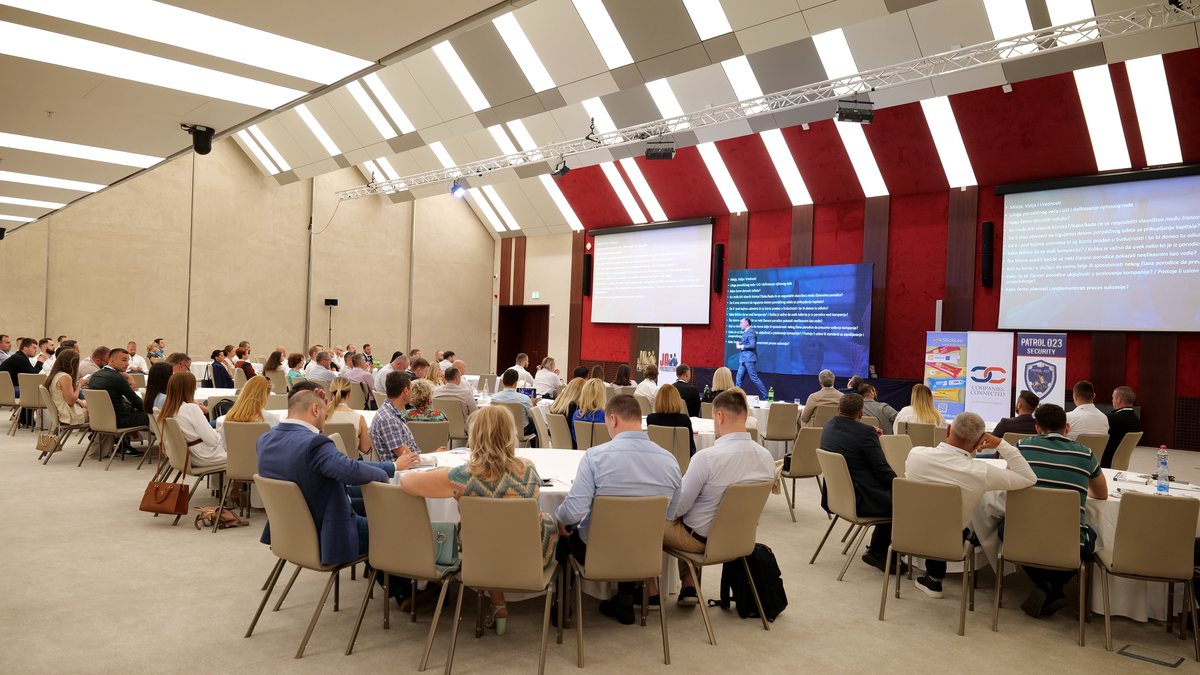
Growth of the team from 180 to over 400 employees brought the company to the point at which a model where the owners personally hold most of the operations could no longer support further development. It was precisely at that point that the second generation launched the move from a founder-led to a professionalised model of running the company.
A company outgrowing the founder model
Growth exposed the limits of a model in which the owners hold most of the decisions and operations. The findings from the field were concrete:
- Decisions — both operational and strategic — were concentrated in the owners, who became the bottleneck through which most of the company passes.
- Institutional knowledge about clients, locations and ways of working was in the heads of a few people and hadn't been translated into processes.
- Managing field teams was uneven — it depended on individual supervisors, without a common standard.
- The complexity of the business grew faster than the systems meant to support it — more people, locations and shifts.
- Strategic and operational topics were dealt with at the same table, so the urgent constantly crowded out the important.
Diagnostic as risk assessment
The diagnostic wasn't a list of activities but a risk assessment. For each finding we determined the level of risk to further growth and the consequences of leaving it unresolved.
Dependence on the owners Critical risk
Most decisions passed through the owners, turning them into a bottleneck: the pace of the whole organisation was limited by their capacity. Left unresolved, any further growth would only increase the load at the top — to the point where growth becomes unsustainable.
Absence of a management layer High risk
Between the owners and the field teams there was no layer of managers with clear accountability. Without it there was no one to delegate decisions to, so they returned to the top. With the team doubling, that gap would directly threaten coordination and quality control.
Processes tied to individuals High risk
Quality and coordination relied on specific people rather than on a system. In a service business with a large workforce, every departure or new hire would carry a risk to the service standard. Without standardisation, quality would become increasingly uneven as the company grows.
Growth without a system High risk
Complexity grew faster than the structures and processes meant to support it. Such a mismatch only becomes visible once the scale passes the limit that improvisation can carry. If left unresolved, the company would grow into risk rather than value.
A transformation in five phases
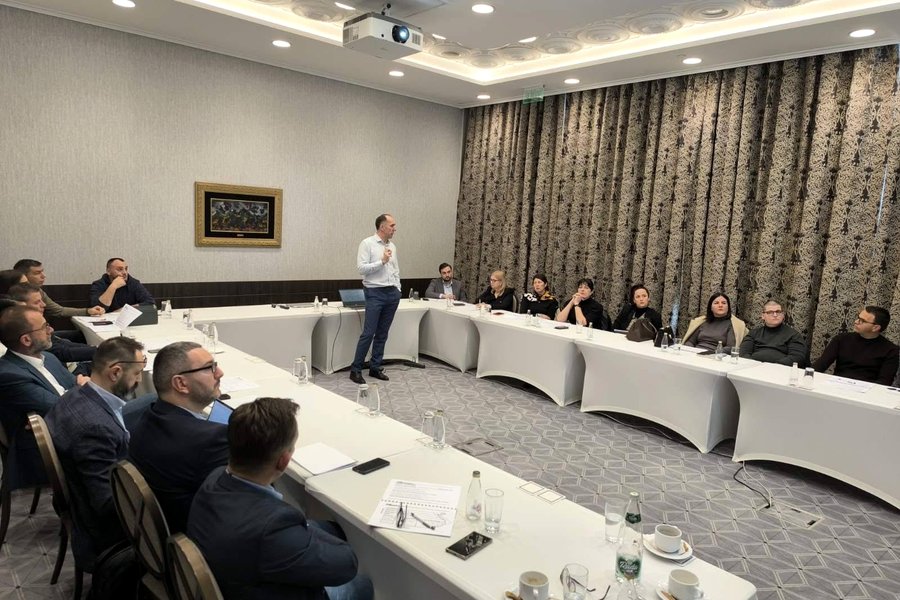
The transformation wasn't carried out through isolated initiatives but through an integrated professionalisation process that covered strategy, organisational design, the governance system and management development.
Diagnostic
Challenge. Before any change, we had to determine where the company depends on individuals and what limits growth. Done. We assessed the organisation, the operations and the points of dependence on the owners, and evaluated the risks tied to growth. Effect. An objective map of priorities was produced — the sequence of interventions followed from the findings, not from a pre-prepared package.
Strategy and operating model
Challenge. Growth of this scale requires a decision about how the company should be run, not just how much it should grow. Done. We defined the growth priorities and a target operating model suited to an organisation of several hundred employees. Effect. All later decisions about organisation and processes gained a clear criterion, instead of being made ad hoc.
Organisational design and management layer
Challenge. Without middle management, all decisions returned to the owners. Done. We built a management layer and defined roles, responsibilities and reporting lines for a larger scale. Effect. The owners had, for the first time, someone to pass decisions to, and the organisation a structure that coordinates a larger number of people.
Governance and accountability system
Challenge. For the company to work without the owners' constant presence, leadership had to become systematic and measurable. Done. We introduced an accountability system, the delegation of decisions, a rhythm of management meetings and reporting, along with the standardisation of key processes. Effect. Decisions began to be made closer to where problems arise, and the top of the company gained an objective picture of the business.
Managing growth
Challenge. The aim wasn't only to order the company today, but to enable it to grow without a proportional load on the owners. Done. We set up a model for managing growth and moved the owners out of daily operations to the strategic level. Effect. The team's growth from 180 to over 400 people was achieved without destroying quality, and the capacity for further growth was built into the organisation.
The building blocks of professionalisation
How the company works today
The growth of revenue and the team wasn't the aim of the transformation but its consequence. The most important change happened in the way the company works.
The numbers confirm that the system works — growth became the consequence of an ordered organisation:
The owner at the centre of decision-making
Delegated responsibilities and a KPI system
The values shown are rounded to protect the client's confidential data.
Where the company is today
What changed in the way the company is run
- Operations
- Centralisation
- Ad hoc decision-making
- Informal management
- Processes tied to individuals
- Growth dependent on the owners
- Strategy
- Delegation
- Systematic decision-making
- A management layer
- Standardised processes
- Growth built into the organisation
"The biggest change wasn't the growth from 180 to over 400 employees. The biggest change was that the company no longer depended on us personally. Today the system works even when we're not at the operational centre of the company."
Lessons for growing family businesses
Getting the owners out of the operational centre
While the owners hold operations, the company can't grow beyond their personal capacity. The decisive move was systematically shifting decisions from the owners to management. That gave the owners room to lead, and the company the capacity to grow.
Building a management layer
Doubling the team can't be carried by an organisation without middle management. Establishing a layer of managers with clear accountability was the precondition for growth to be sustainable. Without it, each new team would only increase the pressure on the top.
A system instead of individuals
In a service business, quality easily depends on people. Translating processes and control into a system made quality less sensitive to individual departures and new hires. That's what enables scaling without a drop in standards.
Discipline of implementation
Fast growth without a system usually ends in a drop in quality. Most of the value was created in the execution — structures and processes entered daily work rather than staying on paper. That's why growth from 180 to over 400 people happened without destroying what had brought the company that far.
The role of the second generation
The change was led from within by a representative of the second generation. That gave the transformation a legitimacy an external advisor cannot provide. The successor took over a system that can grow, not operations that must be held personally.
Find out what is limiting the growth of your family business today
The diagnostic isn't a sales meeting. It's a structured analysis from which you leave with a clear picture of where you stand, what the biggest risks are, and what's needed to move into the next stage of development.
A methodology proven in dozens of family businesses in manufacturing, trade and services across the region.